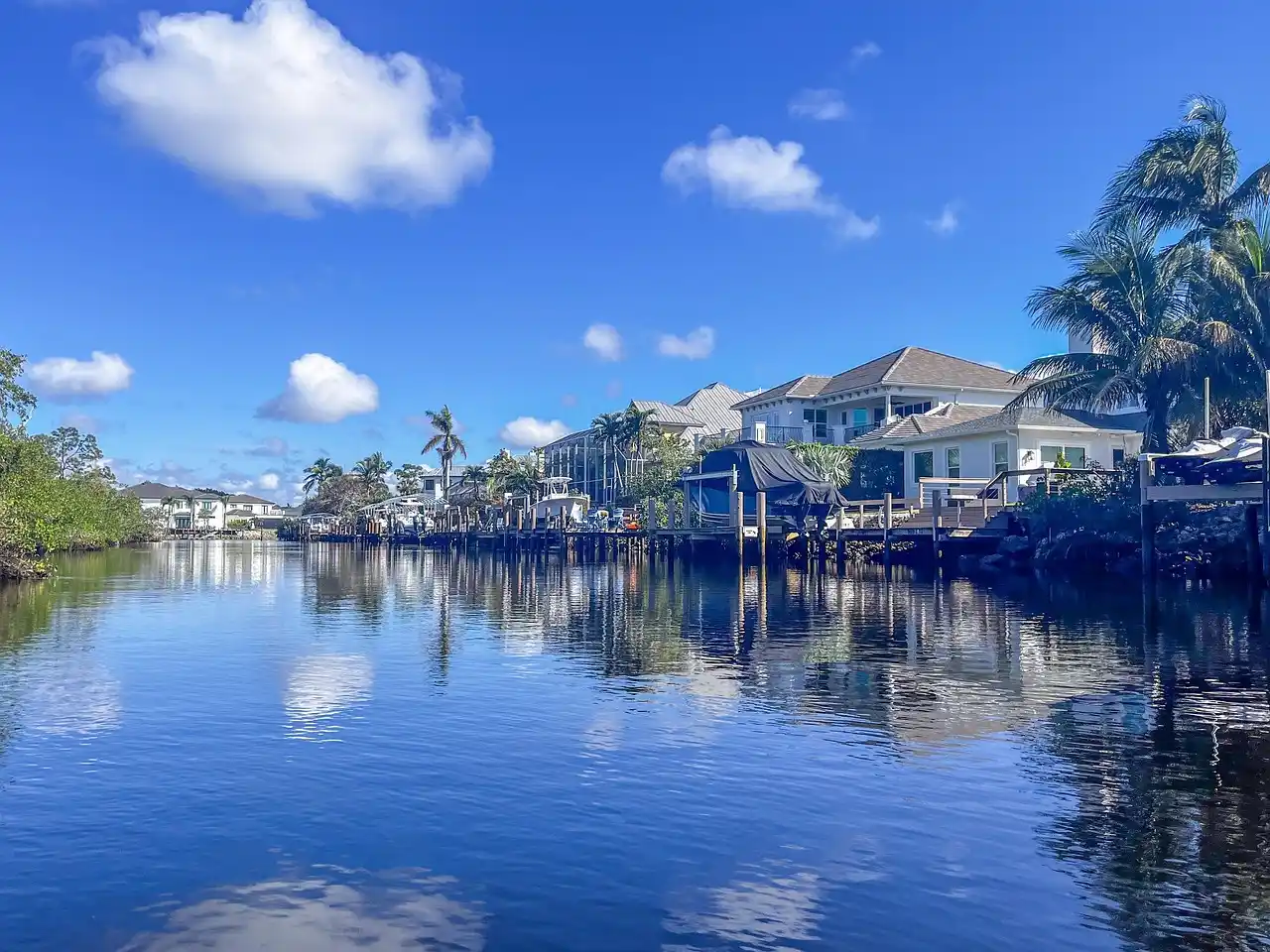
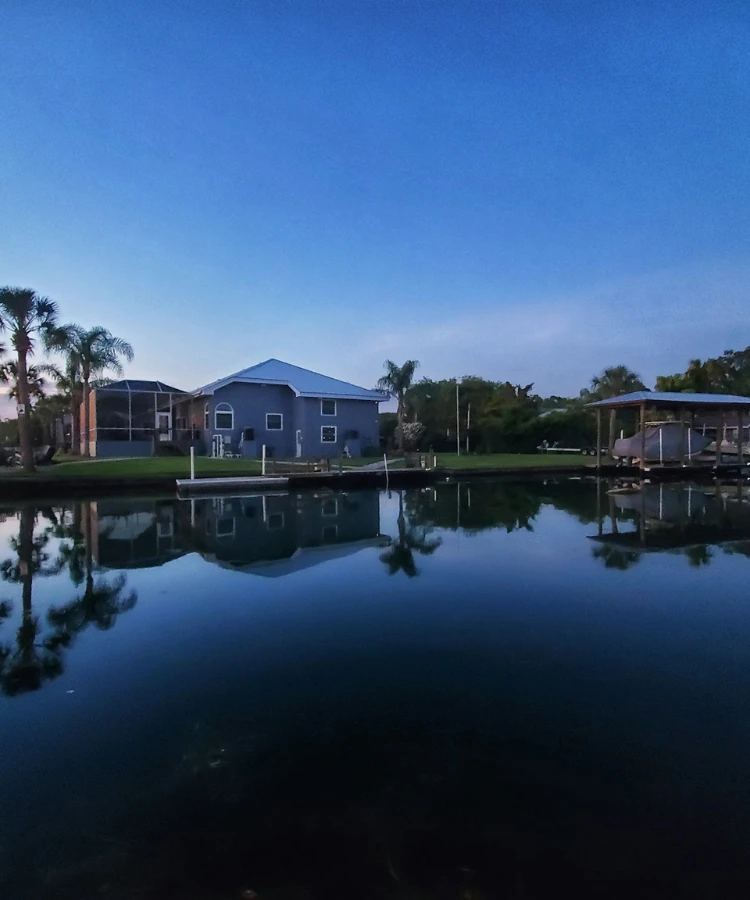
Designed to keep water from infiltrating a homeowner’s land, seawalls and bulkheads are usually not included in home insurance. In addition to a
comprehensive inspection, find a marine engineer or certified seawall/bulkhead specialist to do an inspection. Be sure the inspector checks out the hydrostatic balance, underwater berm penetration, cracks, rust stains, soil loss, erosion, corroded tie rods, or deteriorating rebar that can affect the integrity of the seawall. The report should have photos both in and out of the water, cover footings, pilings, panels, bulkhead, and seawall cap, and identify the type of seawall – whether t-pile, coral rock, or aluminum, or wood. Also, it is important to examine the boat lift and dock. Find out if the dock and boatlift were permitted, a find a certified inspector to have a look at your dock and boat lift. and be sure the report shows an assessment of anchorage, walkway, handrails, deck, hardware, flotation, concrete or wood pile condition, piling caps, structural integrity, electrical (boxes, breakers, FGCI protection, conduit, ground jumpers), plumbing and all of the parts of boat lifts. Fixing portions of the seawall, bulkhead, dock, and boat lit can be extremely costly. Assessing the recurrent physical condition and getting a projection of the life expectancy and repairs that may be needed will help save you from massive expenses later on.
Flood Insurance is not included in home insurance, so you will want to be sure to get a quote before going under contract on waterfront homes for sale in Florida. Recently, FEMA enacted Risk Rating 2.0, the first major restructuring of the National Flood Insurance Programs since 1968. Years in the making, Risk Rating 2.0 is a new methodology based on science, data, and the latest technology to determine a structure’s unique flood risk. Rate Risk 2.0 impact on FL homeowners has been alarming, as many of been overpaying or underpaying. Since waterfront homes for sale in Florida typically are in high-risk flood areas, home buyers will need to be prepared to be required to carry flood insurance, and at a greater cost than the current owner as that rate likely will not be passed along to the new owner.
Waterfront homes for sale in Florida are exposed to dramatic weather such as heavy humid air, direct hot sunlight, and saltwater corrosion, plus, hurricanes causing winds, torrential rain, nonstop lightning, and water sprouts. It is crucial you find out as much about the home as possible. Concrete block construction is often considered the most safeguarded construction material, however, some mixed treated wood frames will fair well if done correctly. Go over the foundation, roof, siding, windows, glass doors, decking, insulation, garage doors, exterior paint, and landscaping to be sure they are all sound and capable of handling the high potential for extreme weather. Does the home have hurricane shutters? Impact windows? fiberglass doors? Find out the history of the home, has it gone through a hurricane or major storm? If so, did the home flood or take on great damage? Many of these particulars will make a difference in home insurance prices and offer a point of reference for
negotiating repairs after inspection.While searching for waterfront homes for sale in Florida, be sure to order a survey, and have a legal professional review the property description in the deed to confirm the land is indeed a true waterfront property. In order to utilize Riparian rights or Littoral Rights, the land must be waterfront true and through, not adjacent to or near a body of water. Riparian Rights are granted to landowners with homes situated on a river or stream, where the property line extends to the high water mark. Riparian Rights allow owners to use the water as they wish, so long as activities do not disturb the neighbors upstream and downstream. Littoral rights pertain to land sitting on navigable lake and ocean waters, giving landowners unrestricted access to the waters. The property line of privately owned waterfront land is set at the median high water mark, and any land beyond this point belongs to the government. Riparian right is commonly used to describe property rights in both categories.