Key Economic Indications
U.S. Housing Market Update
With key economic indicators pointing in very different directions, economists are at odds over the economy’s direction. In early February, the National Association for Business Economics (NABE) surveyed 48 of the leading business economists in the United States. According to NABE President Julia Coronado, “Estimates of inflation-adjusted gross domestic product or real GDP, inflation, labor market indicators, and interest rates are all widely diffused, likely reflecting a variety of opinions on the fate of the economy—ranging from recession to soft landing to robust growth.” Despite these mixed predictions, 58% of respondents believe a recession is imminent in the next year.
The National Association of Realtors (NAR) reported home sales declining for the twelfth consecutive month, with a 36.9% year-over-year decrease in January. However, with interest rates trending slightly downward in December and January, the pending home sales index improved by 8.1% month-over-month. While pending home sales show signs of improvement, they are still down 24.1% year-over-year. NAR President Lawrence Yun predicts that “an annual gain in home sales will not occur until 2024.” Some economists fear that the political battle over the debt ceiling could push mortgage interest rates up, exacerbating the cooling of the US housing market. Edward Seiler, Associate Vice President of the Mortgage Bankers Association, makes a more optimistic prediction for the 2023 housing market, “Mortgage rates and home-price growth should soften, which, along with cooling inflation, should help bring more prospective buyers into the market during the spring homebuying season.”
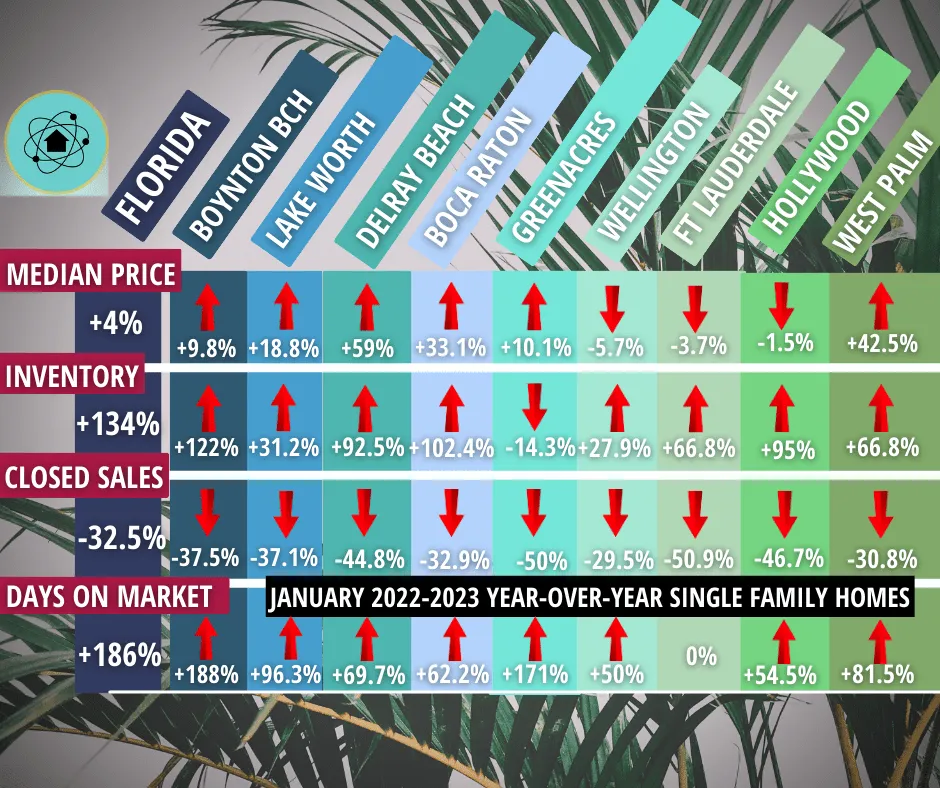
With mixed results from the Fed’s efforts to curb inflation and widespread disagreement over the existence of a looming recession, projections for 2023 mortgage interest rates are all over the board. The rapid rate increases in 2022 from 3% to above 6% demonstrates how volatile interest rates can be. With that said, homebuyers that aren’t priced out of the market by interest rates will be pleasantly surprised by the number of homes to choose from. U.S. Housing inventory increased 15.3% year-over-year. With more inventory, homes are taking longer to sell. Only 54% of the homes sold in January were on the market for less than a month. Yun explains the relationship between home prices and days on the market, “Homes sitting on the market for more than 60 days can be purchased for around 10% less than the original list price.” With inventory increasing while interest rates curb buyer demand, price reductions on existing listings can be expected.