Florida Townhouse

What’s a Townhouse?

Premium townhomes with space, privacy, and upscale finishes.
Deciphering Townhouse Ownership

Fee Simple vs. Condominium Structure

A townhouse refers to a type of property that resembles a single-family home, except that it usually shares one or more walls with other independently-owned units. If you are considering purchasing a townhouse in Florida, it’s important to find out what type of ownership is granted in your community of interest. You need to know if you will be granted fee simple or condominium ownership. This distinction will impact your financing options, insurance requirements, and maintenance responsibilities.  Let’s examine common townhouse characteristics and compare the different types of ownership offered in townhouse communities.

Townhouse Characteristics

There are many different types of townhouses, but these are some of the most common features:
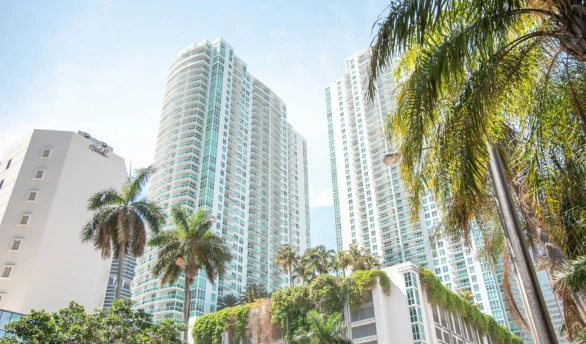
Luxury townhouses blend the spacious layout of traditional single-family residences with the effortless maintenance of multi-family structures. Characterized by their uniform, uniform facades and multi-story designs, these homes optimize vertical space by traditionally positioning open-concept living zones and gourmet kitchens on the lower level, while reserving the upper floors for private bedroom suites.

Fee Simple vs Condominium Ownership

You can determine the type of ownership offered in your community of interest by searching for the property on the county tax appraiser’s website.  Click HERE for Palm Beach County or HERE for Broward County.   Once you locate the property, look for the legal description to see if it includes the words condo or condominium.  If it does, you will be granted condominium ownership.  Alternatively, you can look at the listing to see if the townhouse is governed by an HOA or a condominium association.

Fee Simple

Homeowners that are granted fee simple ownership take possession of the interior and exterior walls, roof, land, and mineral rights below ground.  This is the highest form of ownership.  With these rights comes more responsibilities.  Homeowner’s insurance will be required to cover the structure, land, and your personal property.  There may be a homeowners association that will maintain the common areas in the community and might cover utilities such as trash collection and water.  If there is an HOA, be sure to find out what the maintenance fees are and what they cover.  In most cases, you will be responsible for exterior maintenance and landscaping.  The good news is you will have a wide variety of financing options.

The Condominium Concept

Condominium Ownership

If you purchase a townhouse under a condominium ownership concept, you will own the interior of the unit, but the building and land will be communally owned.  Under this scenario, the condo association will be responsible for the maintenance of the roof, exterior of the building, and the land.  You will be required to purchase a condo insurance policy to cover the interior of your unit and your personal property.  Be sure that you know what is covered by the association’s master policy.  Typically the master policy covers the building and the structure of your unit, but there are exceptions.  Be sure to ask so that you can put together a realistic budget for your carrying costs.  Financing a condo can present more challenges than financing a fee-simple property, especially if you plan on using an FHA loan.

Talk To Our Expert Now

Whether you are acquiring a premier 55+ residence, liquidating a high-value asset, or scaling an investment portfolio, Real-ativity provides the meticulous data and market intelligence required for success. Connect with our expert team to streamline your buying, selling, or investing strategy.