Exclusive buyer Brokerage Agreements in Florida (ebba)
EBBA: What Buyers Should Know
A Buyer Brokerage Agreement (BBA) that buyers are asked to sign may appear straightforward at first glance: perhaps one or two pages of standard contract language, an agent explaining, “We just need this signed before we can show you the property,” and a request to sign it immediately—sometimes at the gatehouse or moments before entering the home.
What that agreement actually establishes, how long it remains in effect, how compensation is determined, and what your options are if the relationship is not working are important details every buyer should understand before signing.
This is a consumer-education guide designed to help Palm Beach County buyers understand the agreements they may encounter when working with a real estate professional. We work with these agreements regularly, and our goal is to explain the provisions buyers should understand and the questions they should ask.
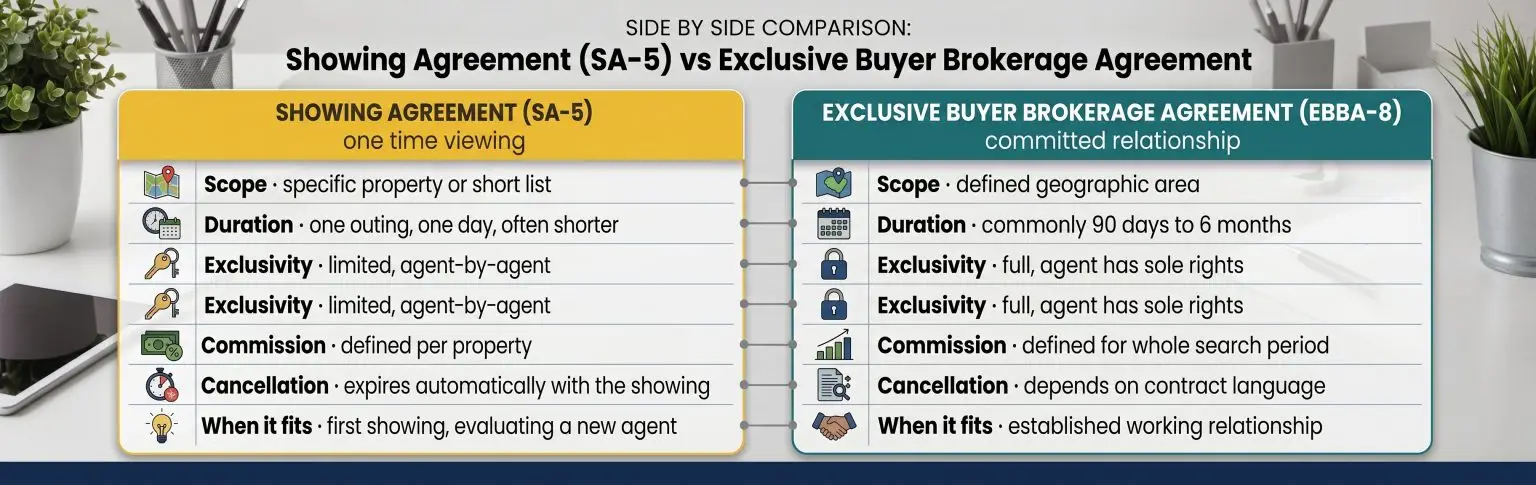
A Buyer Brokerage Agreement does not necessarily have to commit you to an agent for months. The compensation amount is negotiable and is not established at a universally required rate. Depending on the circumstances, a buyer may also be able to begin with a Showing Agreement for a specific property tour rather than immediately entering into a longer-term Exclusive Buyer Brokerage Agreement. A limited Showing Agreement can provide an opportunity for both the buyer and the real estate professional to determine whether they are a good fit before establishing a longer-term representation relationship.
At Real-ativity, we believe Palm Beach County buyers should understand their options before they walk through the front door—not after they have signed an agreement they do not fully understand. Our goal is simple: give buyers the information they need to make informed decisions about who represents them, what they agree to, and how their broker will be compensated.