PREMIER COASTAL HUBS

Fort Lauderdale 55+ Communities

Explore upscale and vibrant 55+ active adult living in Fort Lauderdale.
overview

Experience Fort Lauderdale 55+ Living

Whether you are looking to slow down or speed up, Fort Lauderdale 55+ Communities offer adults infinite opportunities for both. In the early 1920s, investor J.C. Turner coined Fort Lauderdale the “Venice of America” – a phrase that stuck, still etched on the city seal today. Fort Lauderdale is the largest city and seat of Broward County, offering 165 miles of navigable waterways, which the city works diligently to protect. The 10th largest city in Florida, as of April 1, 2020, the U.S. Census Bureau noted Fort Lauderdale as home to 182,760 residents. Located around 25 miles north of Miami, Fort Lauderdale neighbors Dania Beach and Hollywood to the south, Plantation and Lauderhill to the west, and Oakland Park and Pompano Beach to the north. By population, Fort Lauderdale is the third-largest city in the Miami metropolitan area – the 7th largest urban agglomeration in the United States. There are a variety of architectural styles and designs within each of the Fort Lauderdale 55+ Communities. There are midcentury co-ops, waterfront buildings with units displaying direct views of the ocean, and charming two-story villas mapped throughout canals, to name a few. Additionally, there are dozens of all-age, single-family homes and condos to explore.

Lifestyle

Fort Lauderdale Lifestyle

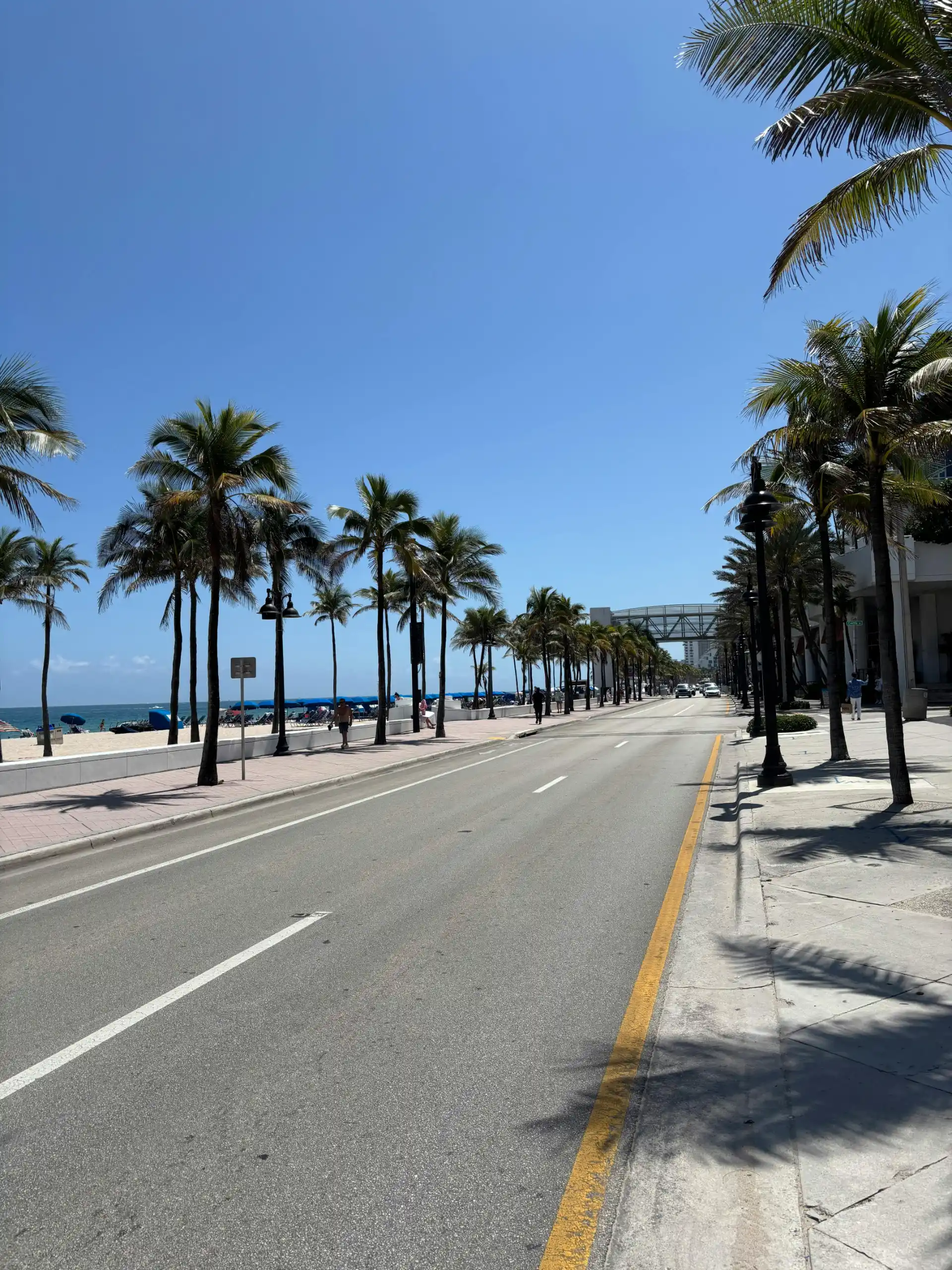
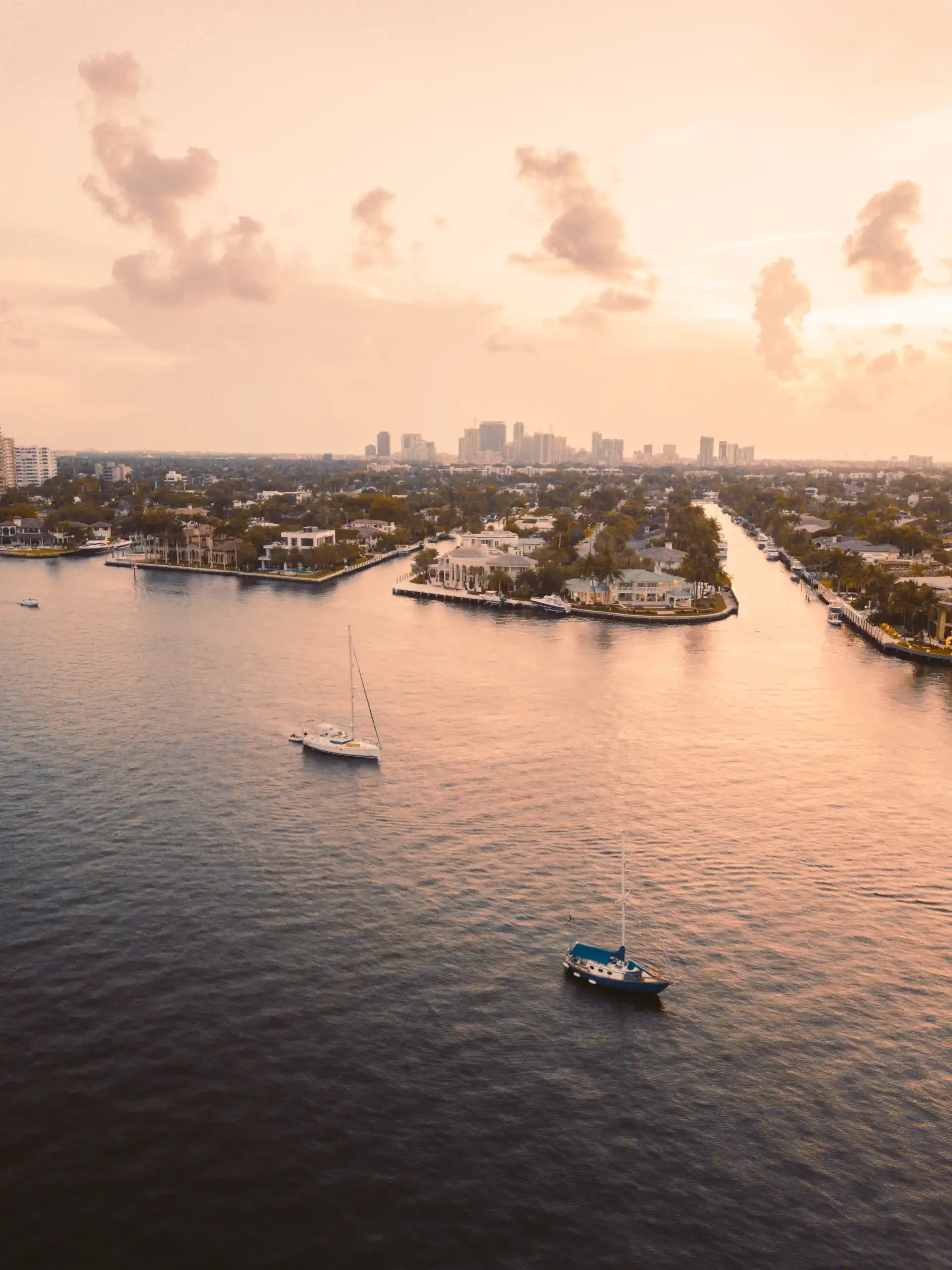
Fort Lauderdale is paradise, boasting a year-round temperature of 75.5 °F and around 3,000 hours of annual sunshine.  Residents can start the day with sunrises over the Atlantic Ocean and end the day with a reflective light show of colors while the sun sets on the Intracoastal waterways.  The city is a cultural hub, featuring world-class dining, shopping, concerts, theater, events, and countless places to explore and things to do.  Las Olas Boulevard is hip and stylish, featuring a unique variety of eateries, boutique shopping, and special events, including the Arts Fairs and the Wine & Food Festivals.  The Bonnet House Museum and Gardens, named after a variety of the Lily flower, is listed on the U.S. National Register of Historic Places.  Visitors can stroll through the renowned estate and its land, spotting unique art pieces, treasures, and artifacts.  The gardens are meticulously mapped to perfection, displaying five different types of ecosystems.  The Bonnet House hosts a variety of lectures, classes, and events, including an International Orchid and Garden Festival in the Spring.  Well-managed transportation services make getting around Fort Lauderdale a breeze.  There is a Water Taxi, remarkably unique to the city of Fort Lauderdale.   On brand with the slogan, “Venice of America,” the Water Taxi has 11 different stops throughout downtown Fort Lauderdale and beverage services available onboard.   The Water Taxi runs from 10 am to 10 pm.  Rock the boat and have some fun with a day pass!

Fort Lauderdale 55+ Communities make it easy for nature enthusiasts, explorers, and adventures to live their best life.  The City of Fort Lauderdale provides dozens of Parks and Facilities.  Known as the Central Park of Fort Lauderdale, Hugh Taylor Birch State Park, is located on a stretch of land between the ocean and the Intracoastal.  In 1941, Hugh Taylor Birch, a Chicago attorney, and the park’s namesake donated the 180 acres of land to the State of Florida to make it a public park.  Anglin’s Fishing Pier at Lauderdale By The Sea is another popular destination for a sunrise stroll, some fishing, a bite to eat, live music, libations, and pristine public beaches.  Established in 2013, the annual Tortuga Music Festival happens every spring, raising awareness and funds for ocean conservation.

Call Us

Let’s jump on a quick 10-minute call.

No pressure, zero marketing fluff. Just tell us what you are looking for in South Florida, and we will provide the straight facts, local insights, and accurate market data needed to help you confidently plan your next smart property move.

slide to call
Heritage & Growth

Fort Lauderdale History

The area’s significant development began towards the end of the 2nd Seminole War. In March of 1837, William Lauderdale and a group of volunteers constructed three forts along the river – one at the fort, another at Tarpon Bend, and the third near present-day Bahia Mar Marina. A handful of businesspeople came to the area in 1892, building the first road from Lantana to Lemon City. They found the new river intersected the road, so, in 1893, Frank Stranahan entered the scene. Recognizing the need, Stranahan started a ferry company. What began as a small operation turned into an overnight stagecoach stop, a camp where travelers, business people, and Seminoles could meet to trade. 1894 to 1895 brought the Big Freeze, and the Florida agriculture industry took a hit. Around the same time, Henry Flagler was working on the Florida East Coast Railway. Flagler allowed his friend Nathaniel Bryan to build the rail connecting to Fort Lauderdale. Mr. Bryan, along with his two eldest sons, Reid and Thomas, relocated from New Smyrna to the Southeast Florida area. On February 22, 1896, the first steam engine arrived in Fort Lauderdale.

Like most areas in Florida, the train’s arrival pumped the growth, and Fort Lauderdale was on its way to becoming a commercial and agricultural hub. In August of 1900, Frank Stranahan married Ivy Julia Cromartie (Stranahan), and the two enlisted Edwin T. King, one of the founding Fort Lauderdale contractors, to build them a home. This home became the city post office, community center, and trading post, a monumental turn toward the city becoming an official municipality. With a solid year-round population, in 1911, the City of Fort Lauderdale was incorporated. William H. Marshall was elected the first mayor.

Stranahan, the Oliver Brothers, and other investors started opening businesses in downtown Fort Lauderdale. At the same time, Ed King builds a boatyard under management by Reid Bryan. The team crafted dredges to cut the north and south river canals, which created a direct route from the east agricultural areas surrounding Lake Okeechobee to the Fort Lauderdale Rail Head. Due to the ease of access from west to east and east to west, the city became known as a top wintertime vegetable market. Charlie Rhodes and the Stilwell brothers came to the area in the 1920s. They made way for the development of Las Olas Blvd, and Fort Lauderdale became interchangeable with Idlewild and Venice. In addition, the early 1920s brought Joseph Young to the area. He purchased land around lake Mabel where he began to build Port Everglades. He sought to grow the economy past tourism and agriculture.

In congruence with the Florida Land Boom of the 1920s, the City of Fort Lauderdale experienced an acceleration in population, growth, and expansion. Development ceased when the Hurricane of 1926 hit, killing 243 people and costing more than 1.5 billion in damage in today’s dollar. Young persevered, and Port Everglades formally opened in 1928. Throughout the 1930s, the population continued to grow, but the speed slowed dramatically, and by the end of the decade, around 18,000 people called Fort Lauderdale home. In the late 1930s and into the early 1940s, city officials sent messages to Washington offering their ports and airfields to assist the country during World War 2. Merril Fog Field became a naval air station, and Port Everglades became the site of a U.S. Navy base. Eventually, the Naval air station became today’s Fort Lauderdale Hollywood International Airport.

After the war, investors flocked to the area as the city saw the most considerable population boom since the early 1920s. Commercial and residential development increased, and the construction of hotels on the beach began. Although people had been traveling to Fort Lauderdale since the 1920s, the city wasn’t the Spring Break destination it is today until the release of the 1960 film, Where the Boys Are. Starring Dolores Hart, George Hamilton, and Yvette Mimieux, “Where the Boys Are” was filmed and set in Fort Lauderdale. The story follows four college girls who drive to Fort Lauderdale for Spring Break. The film’s popularity sprung the city’s reputation as “Fun in the Sun.”

Living in one of the diverse Fort Lauderdale 55+ Communities offers history buffs much to explore. The Fort Lauderdale Historical Society is a terrific place to start!

Scroll down to browse through Fort Lauderdale 55+ Communities.  In each community, check out the boxes at the bottom for detailed information on design & construction, HOA information and restrictions, amenities, and what cool things are nearby.

Subdivision

Featured Neighborhoods

Atlantic Towers

Beachdale

Cliff Lake Villas

Community

Connection

City hall

City Hall

Fort Lauderdale City Hall

100 North Andrews Avenue

Fort Lauderdale, FL 33301

954.828.5003

Code Enforcement

Communtity Development

County Property Appraiser

County Property Appraiser

Broward County Property Appraiser

Broward Governmental Center

115 South Andrews Avenue, Room 111

Fort Lauderdale, FL 33301

954.357.6830

Homestead Exemption

Department of Motor Vehicles

Fire Department

Fire Department

Fort Lauderdale Fire Rescue

Administration Headquarters

528 NW 2nd St

Fort Lauderdale, FL 33311

Non-Emergency Phone: 954.828.6800

Locations of Fire Stations

Garbage Collection & Recycling

Garbage Collection & Recycling Fort Lauderdale Residential Garbage & Recycling Collection Garbage Collection Services: 954.828.8000

Police Department

Police Department

Fort Lauderdale Police Department

1300 W Broward Blvd

Fort Lauderdale, FL 33312

Main Line/Administration: 954.828.5700

Non-Emergency Number: 954.764.4357

Power Company

Public Records

Public Records

Fort Lauderdale City Clerk’s Office

954.828.5002

Public Records Requests

cabrown@fortlauderdale.gov

954.828.5010

100 N. Andrews Avenue, 7th Floor

Fort Lauderdale, Florida 33301

School District

School District

Broward County Public Schools

Kathleen C. Wright (KCW) Administration Center

600 S.E. Third Avenue

Fort Lauderdale, FL 33301

754.321.0000

Directory

School Locator

Supervisor of Elections

Supervisor of Elections

Broward County Supervisor of Elections

Main Office

115 S. Andrews Ave., Room 102

Fort Lauderdale, FL 33301

954.357.8683

Register to Vote

Water & Sewer Utilities

Water & Sewer Utilities

Utility Service

Customer Service: 954.828.8000

Utility Billing/Connects/Disconnects: 954.828.5150

100 N. Andrews Avenue First Floor

Fort Lauderdale, FL 33301

Talk To Our Expert Now

Whether you are acquiring a premier 55+ residence, liquidating a high-value asset, or scaling an investment portfolio, Real-ativity provides the meticulous data and market intelligence required for success. Connect with our expert team to streamline your buying, selling, or investing strategy.